Article
7 min read
The UK talent map: Where high-skilled workers move and what they earn

Author
Lauren Thomas
Published
June 03, 2026


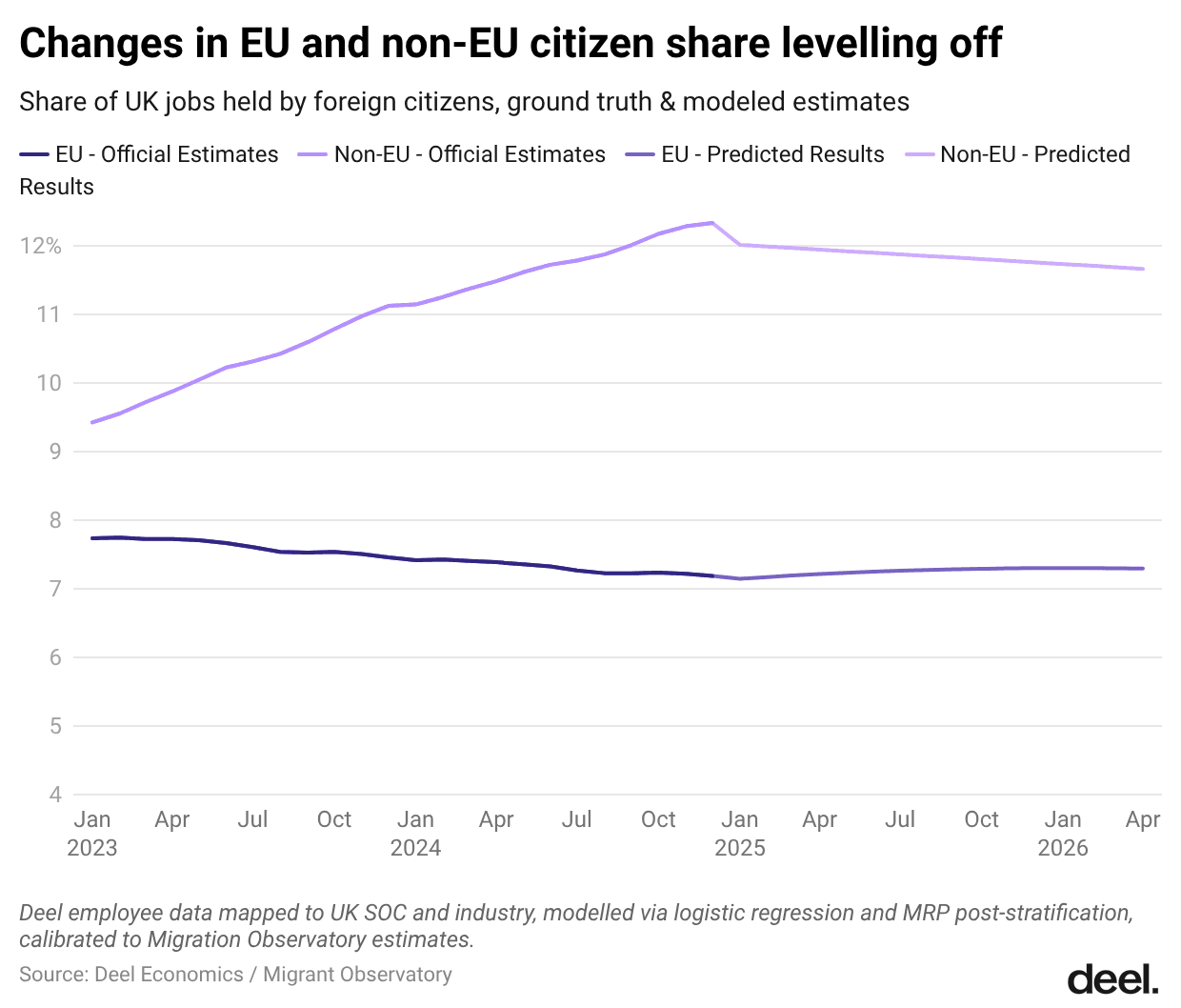
The UK’s foreign workforce is rebalancing after Brexit. The percentage of UK employees who are EU citizens declined steadily from early 2022 through 2024, continuing a trend that Oxford’s Migrant Observatory documented. Meanwhile, non-EU foreign workers initially offset this loss. Liberalized immigration reforms in 2021 and post-COVID recovery drove the proportion of non-EU foreign citizens working in the UK to as high as 12% in late 2024. We can see this increase in our own data – the percentage of UK employees that are neither UK nor EU citizens on Deel grew 5 percentage points between January 2022 and two years later.
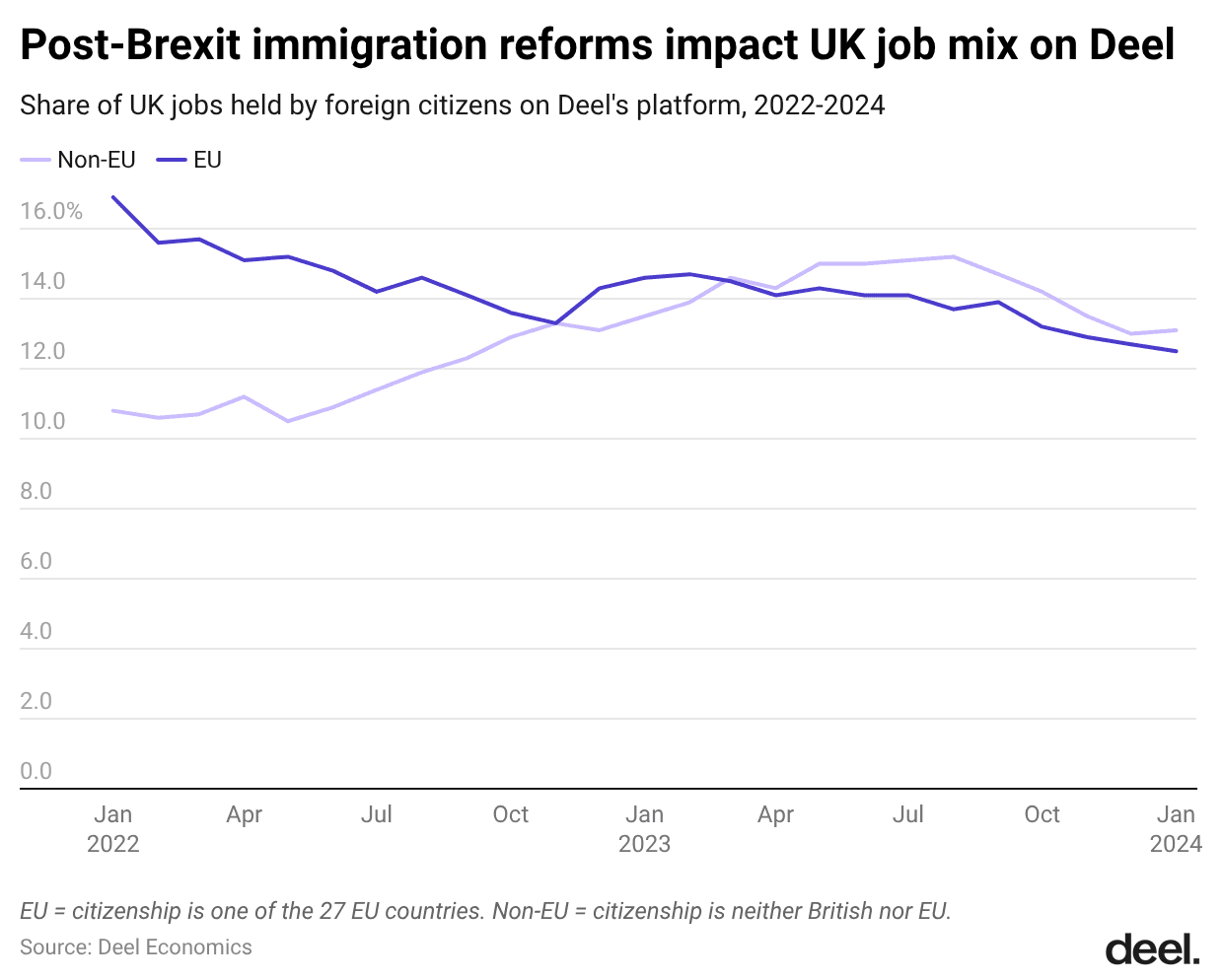
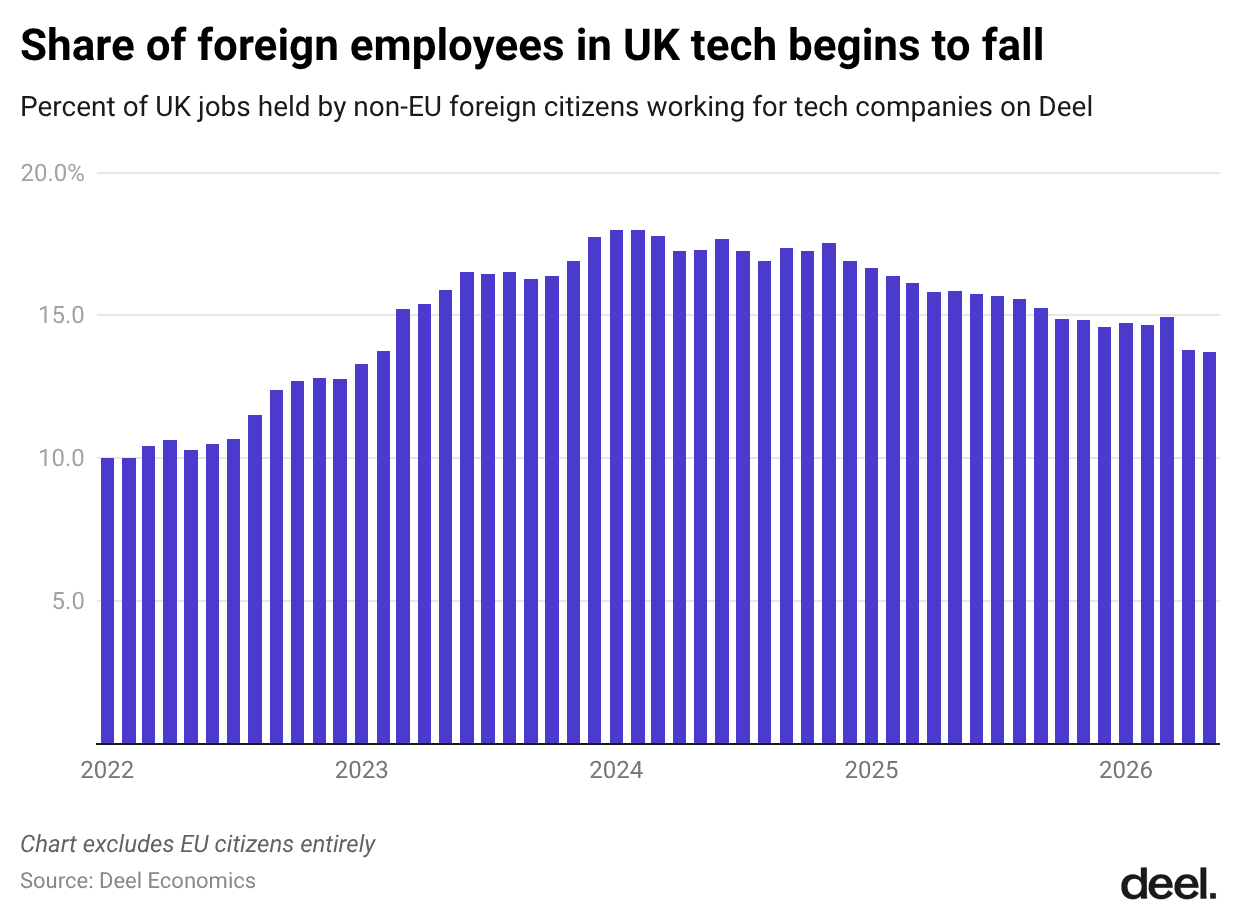
And yet, our data suggests that both trends have begun to level out following restrictions on work migration introduced in 2024 and 2025, including the elimination of social care visas for overseas workers and higher salary thresholds. Even within the tech industry, which employs a high share of foreigners, the share of employees on Deel who are non-EU, non-UK citizens has begun to fall after a sustained period of growth.
The EU citizen decline has also begun to level out. Modeled estimates based on Deel’s data, calibrated to the HMRC data reported on by the Migrant Observatory, suggest both trends are now stabilizing. This suggests that both employers and workers have adapted to the post-Brexit immigration framework.
The workers the UK is attracting – and losing – are younger and higher-paid than headlines suggest. In fact, skilled worker visa holders on Deel’s platform earn a median salary of £96,000 (approximately $130,000), which is well above the UK’s median of £39,000 (approximately $53,999). More notably, they earn more than UK citizens working in comparable roles (median £87,000, approximately $118,000) despite being a median of four years younger.
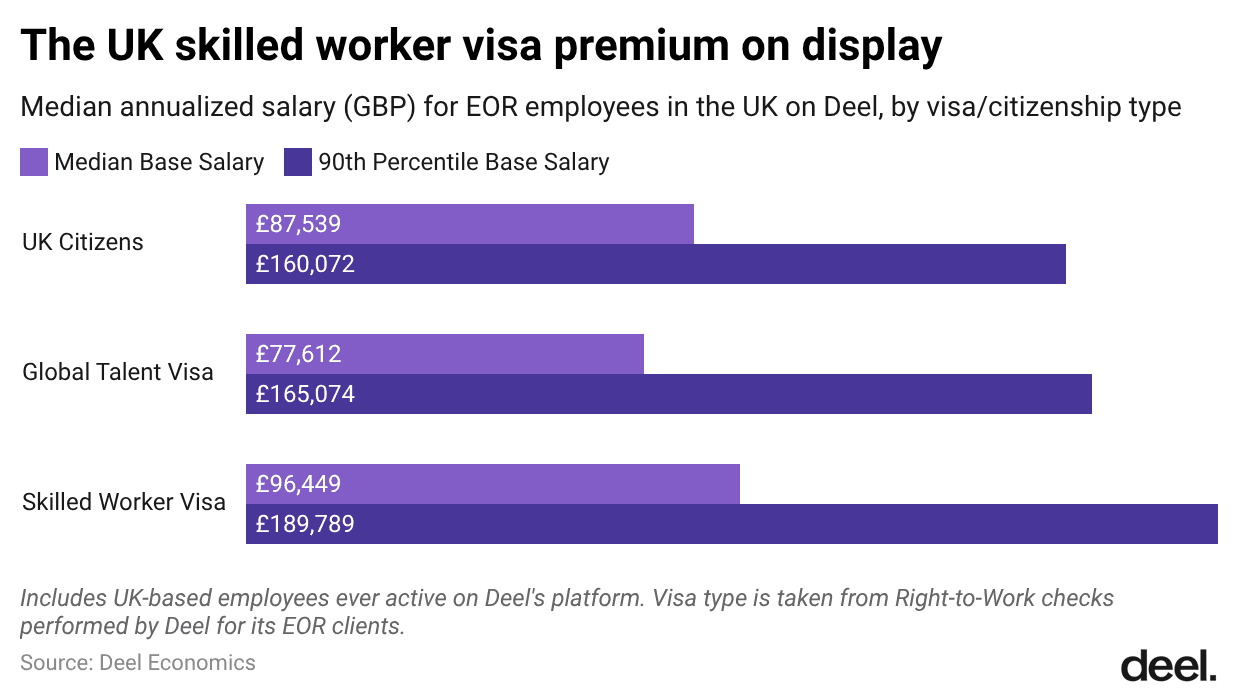
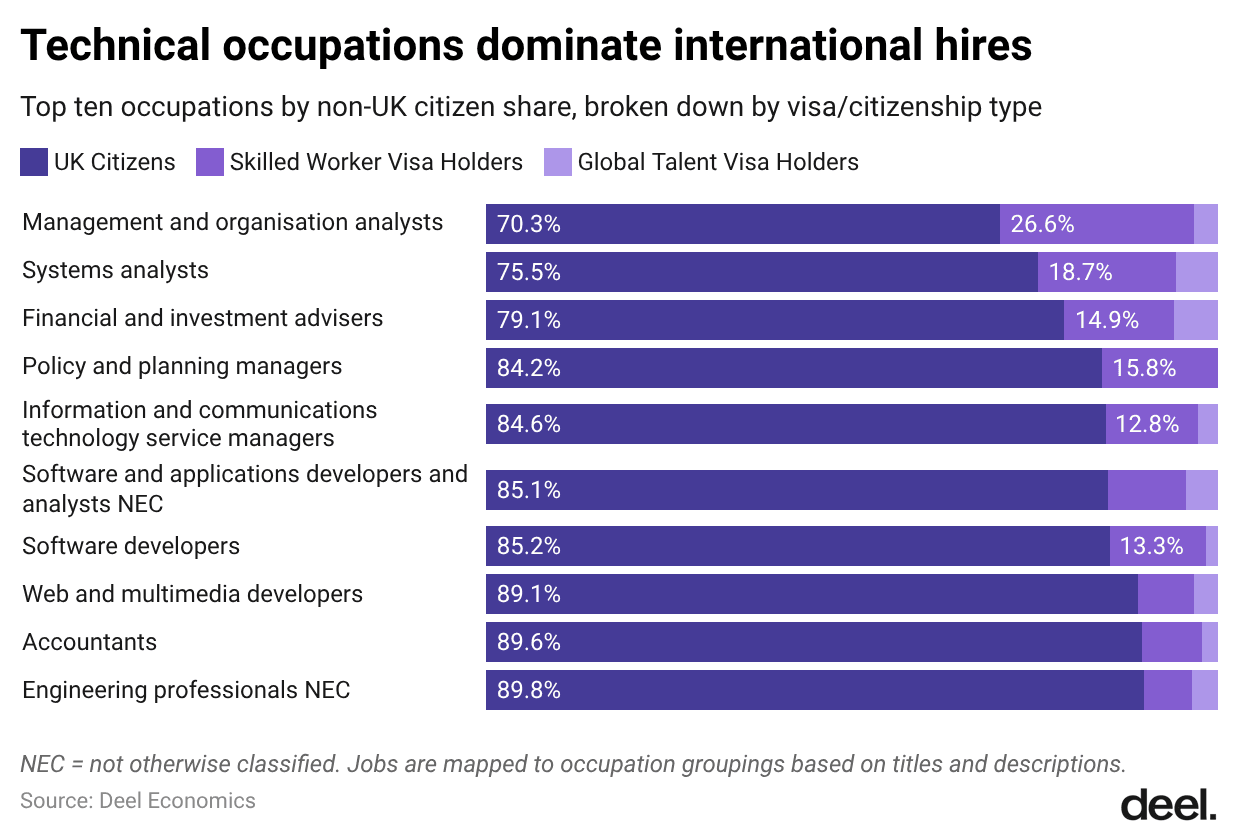
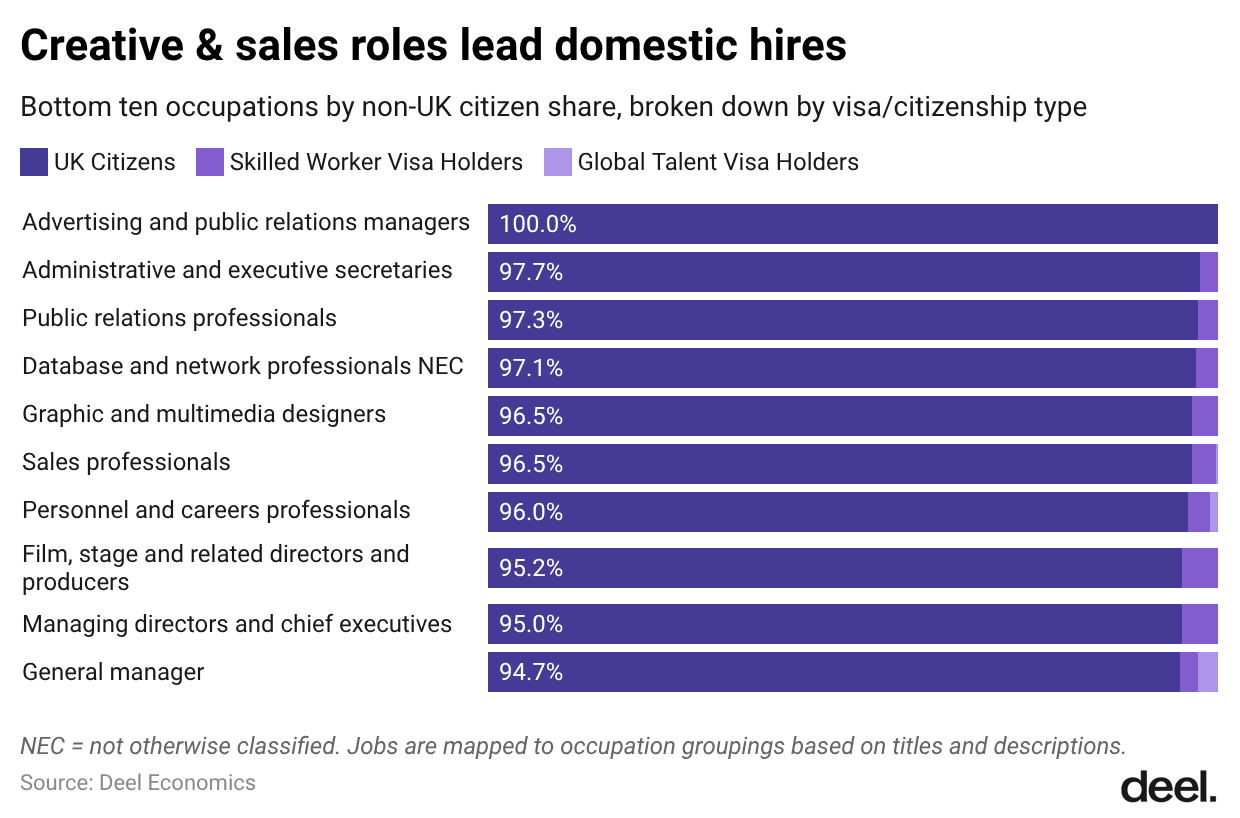
The premium is even more pronounced in tech roles: software developers and data scientists on Skilled Worker visas earn a median of just over £112,000 (approximately $151,000) versus £93,808 for British citizens, a gap that is starker than what appears in the U.S. Software developers make up 13% of Skilled Worker visa holders, while creative and sales roles – which require local market knowledge – are filled almost entirely by British citizens. Much like what we found in our recent Global Hiring Report, this is not a story of cost arbitrage. The UK is competing for – and in many cases winning – top-tier talent.
Top-funded startups go even further
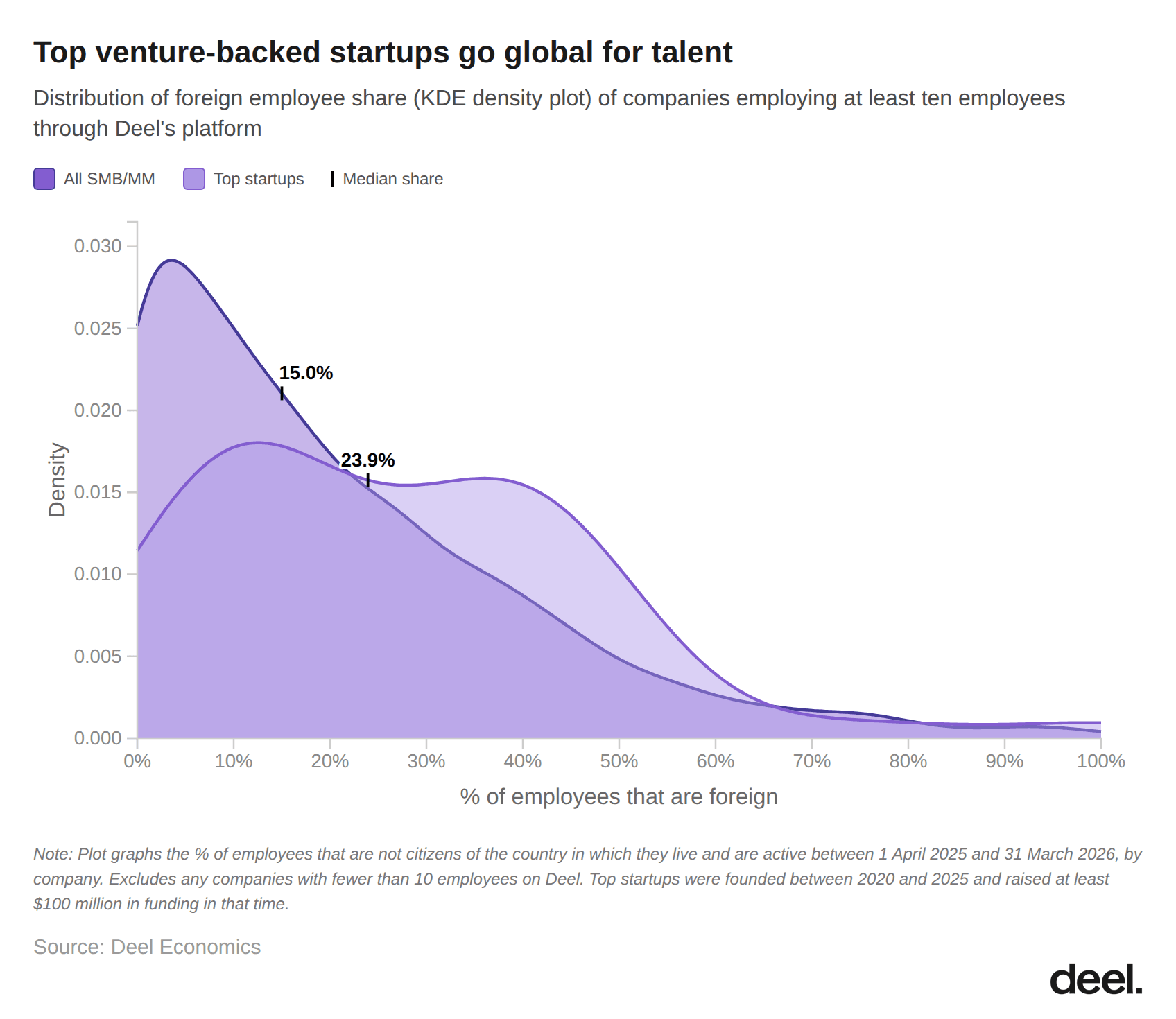
The premium is sharpest at top-funded startups. Among UK-based employees at the same list of top venture-backed startups we analyzed in the Global Hiring Report – companies founded between 2020 and 2025 that raised at least $100 million in funding in that time – 33.3% of workers are foreign citizens, compared with 23.2% at SMB/MMs. The gap between top startups and the broader market is wider in the UK than in the U.S., where the equivalent rates are 8.9% vs. 4.8%.
Unlike the U.S. pattern at the same companies, foreign and British workers at top UK startups earn roughly comparable median salaries (£126,000 vs. £130,000) and hold broadly similar roles. AI engineering concentration exists, but is much less pronounced: 18% of foreign workers at top UK startups work in AI engineering, versus 6% of UK citizens.
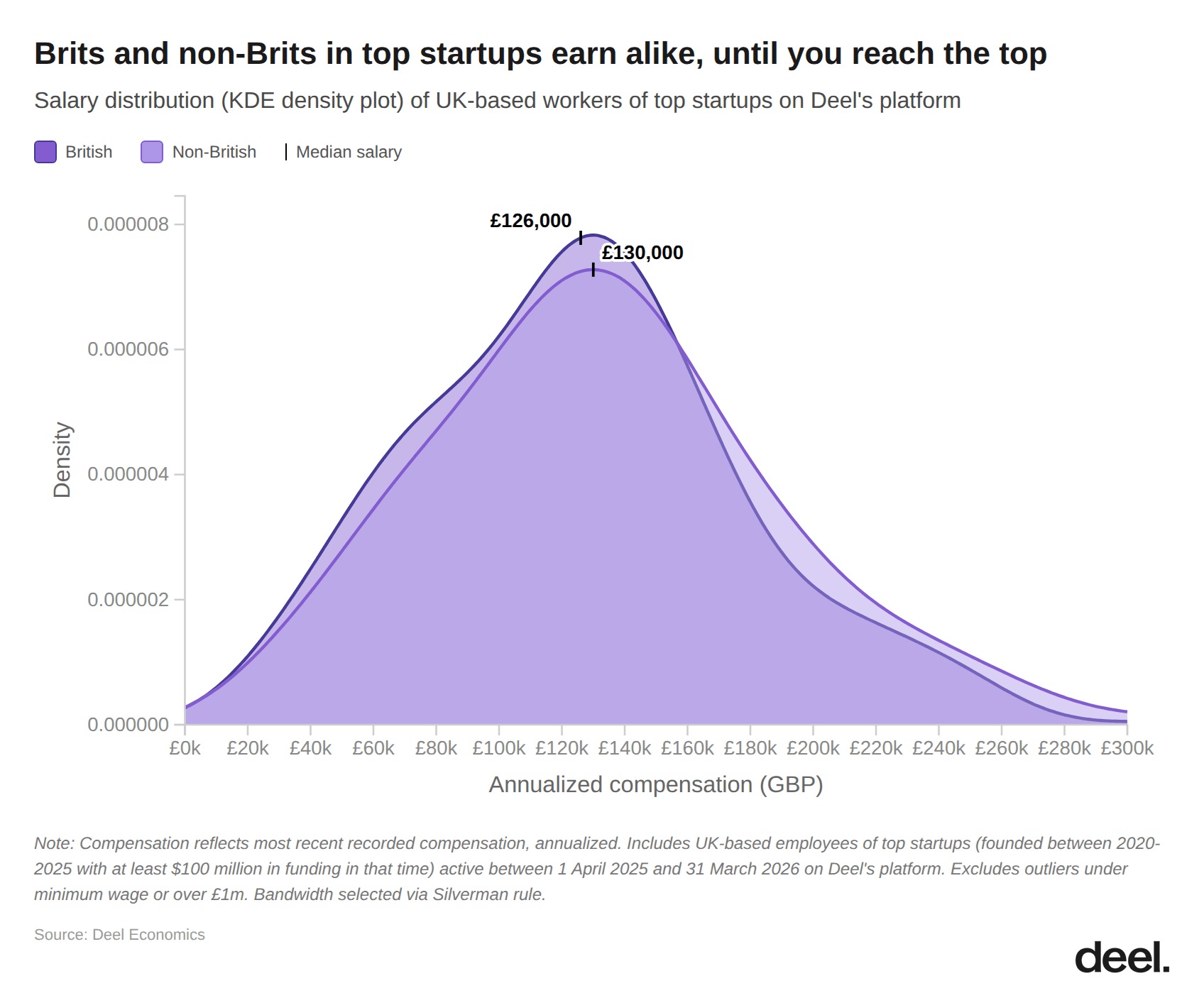
The gap shows up in age and at the top of the distribution. Foreign workers at top UK startups are younger (median 32 vs. 36), and among workers in their twenties the salary gap widens sharply: non-British employees earn a median of £124.6k versus £96k for British counterparts.
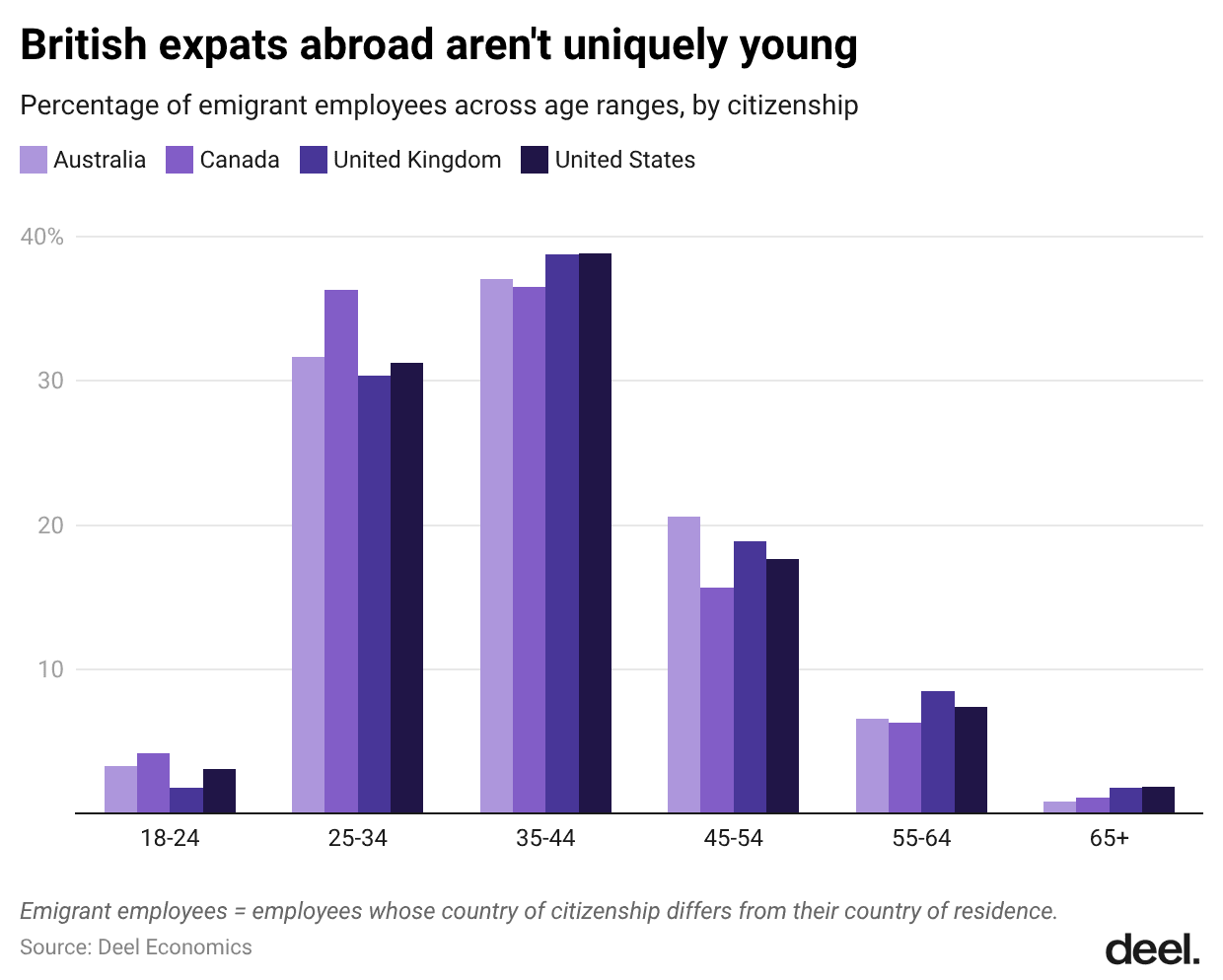
Age patterns reveal another challenge, as immigrants tend to be young. Globally, 43% of workers on Deel’s platform who live in a country different from their citizenship are aged 25-34. When workers from high-income countries emigrate, they skew slightly older: 39.4% of British workers abroad are aged 35-44, nearly identical to Americans (39.3%), Canadians (39.2%), and Australians (36.2%). And the most common age at which UK citizens are approved for a new work visa is between the ages 25 and 34, just like Canada, India, and the US.
The UK isn’t experiencing a unique youth exodus so much as it’s experiencing the same pattern seen across comparable economies. Young workers are going to move; the question is whether they move to the UK or away from it.
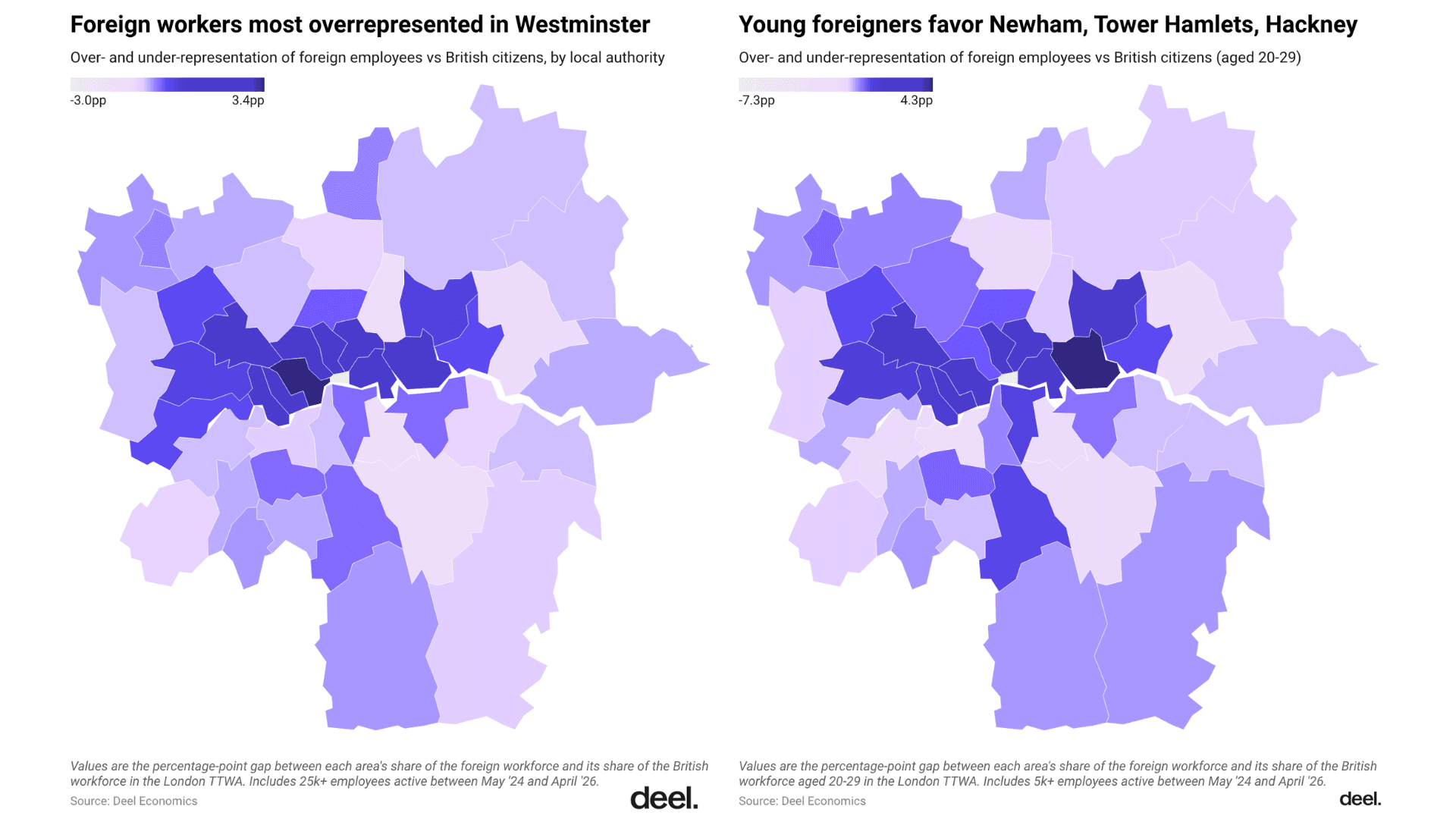
Location reveals other interesting patterns. Foreign workers on Deel tend to cluster near London and a handful of other urban areas: Manchester, Cambridge, Birmingham, Reading, Oxford, and Edinburgh top the list. Much of this ranking is due to these cities’ high populations, but in some cases, they are relatively more likely to attract foreign talent. Comparing each area's share of the foreign workforce with its share of the British workforce reveals notable over-representation in London, Slough, Cambridge, Edinburgh, and Oxford. The latter three are major university towns; Slough's prominence reflects its proximity to Heathrow Airport.
Within the London commuting zone, foreign workers are over-represented in two distinct types of borough: the wealthy inner west (Westminster, Kensington, Islington, Camden) and the East End (Tower Hamlets, Newham). Restricting the analysis to workers aged 20-29 shifts the pattern eastward. Newham, Tower Hamlets, and Hackney emerge as the boroughs where young foreign workers are most over-represented relative to their British counterparts.
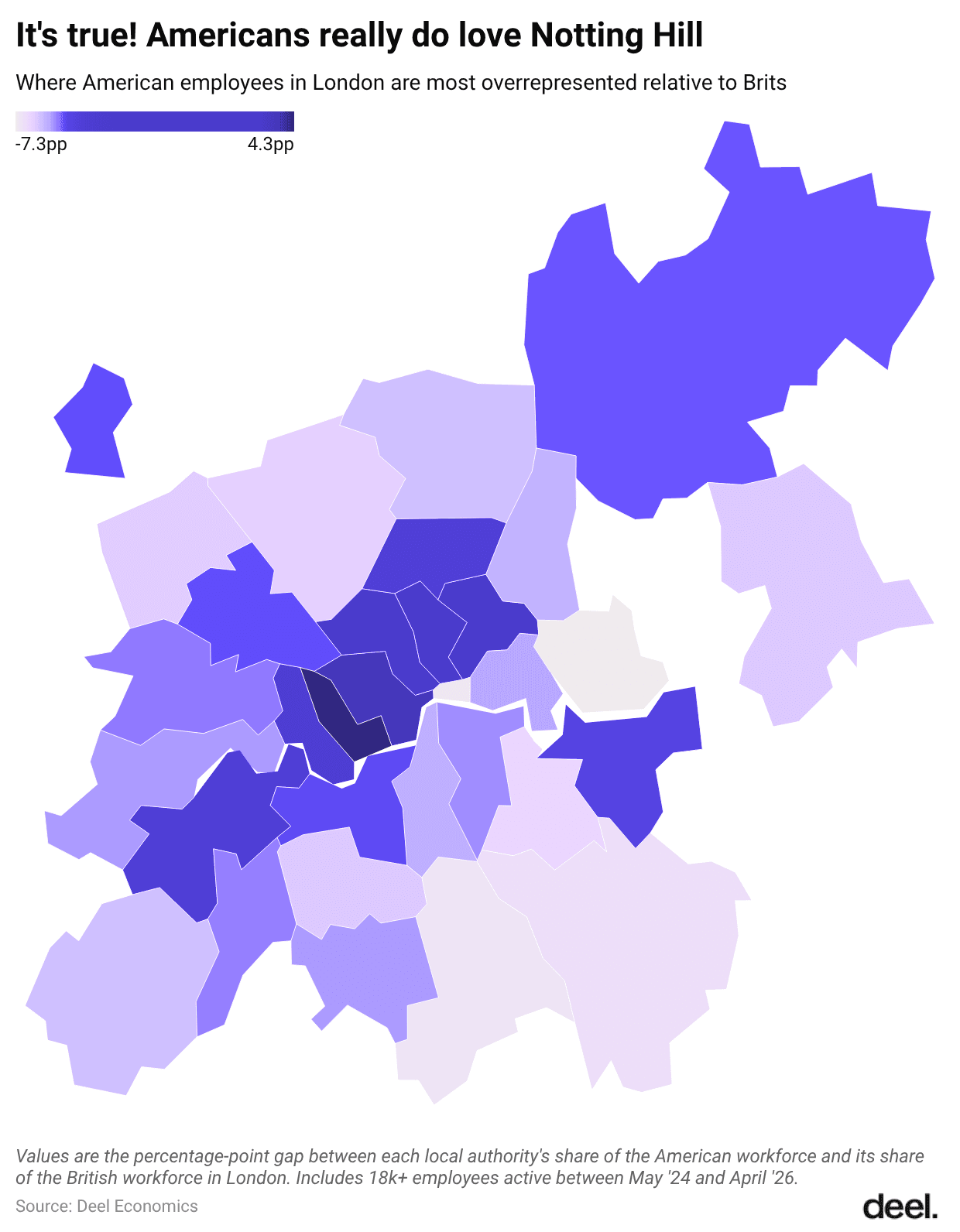
We can look at whether specific nationalities conform to the stereotypes placed upon them. Americans, for instance, are most overrepresented in the Royal Borough of Kensington and Chelsea – home of Notting Hill, where many a romantic British love story has taken place.
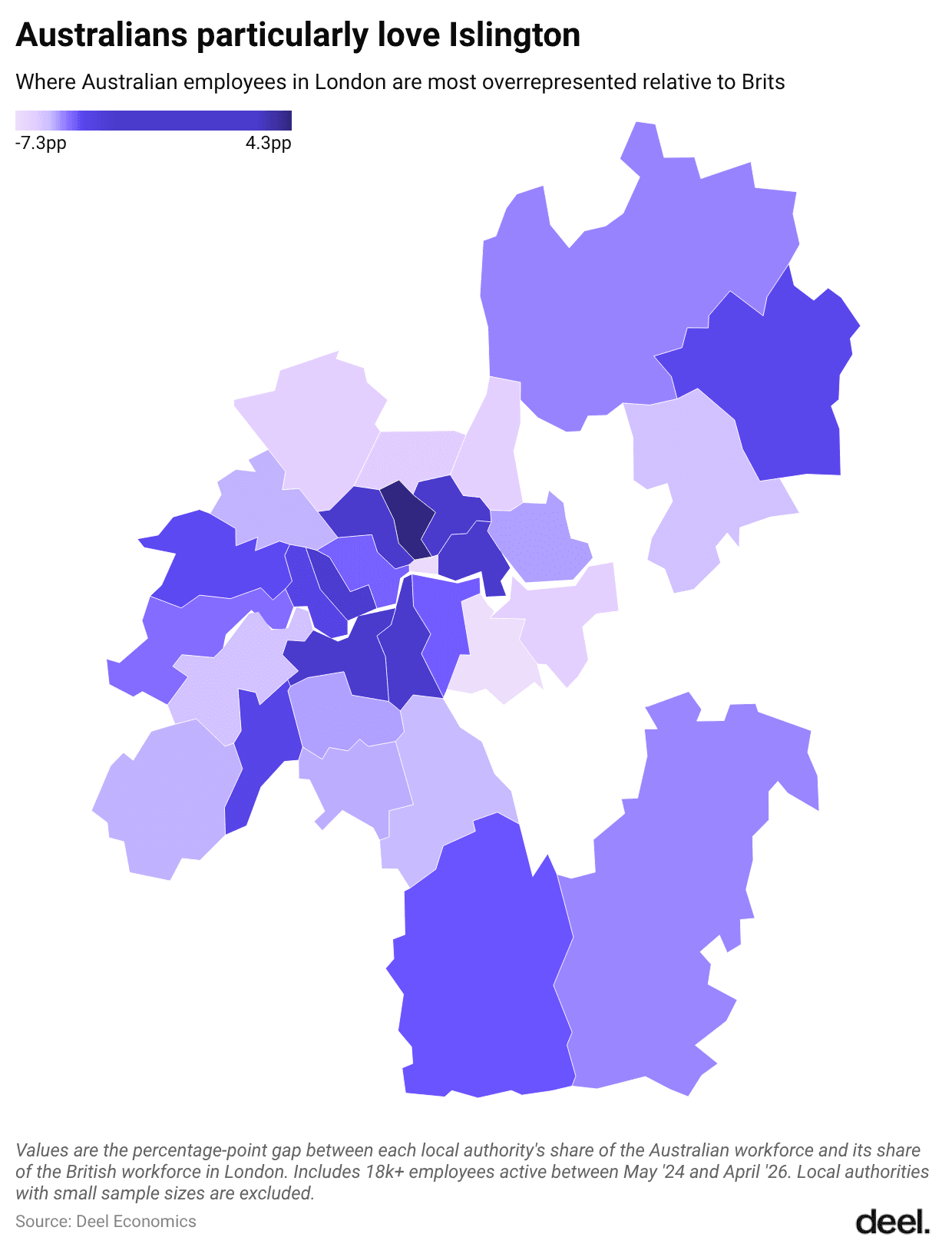
Australians, on the other hand, are actually more overrepresented in Islington and Camden than they are in Wandsworth and Lambeth (numbers 4 & 5 on the list of boroughs, respectively) despite their reputation for congregating in Clapham.
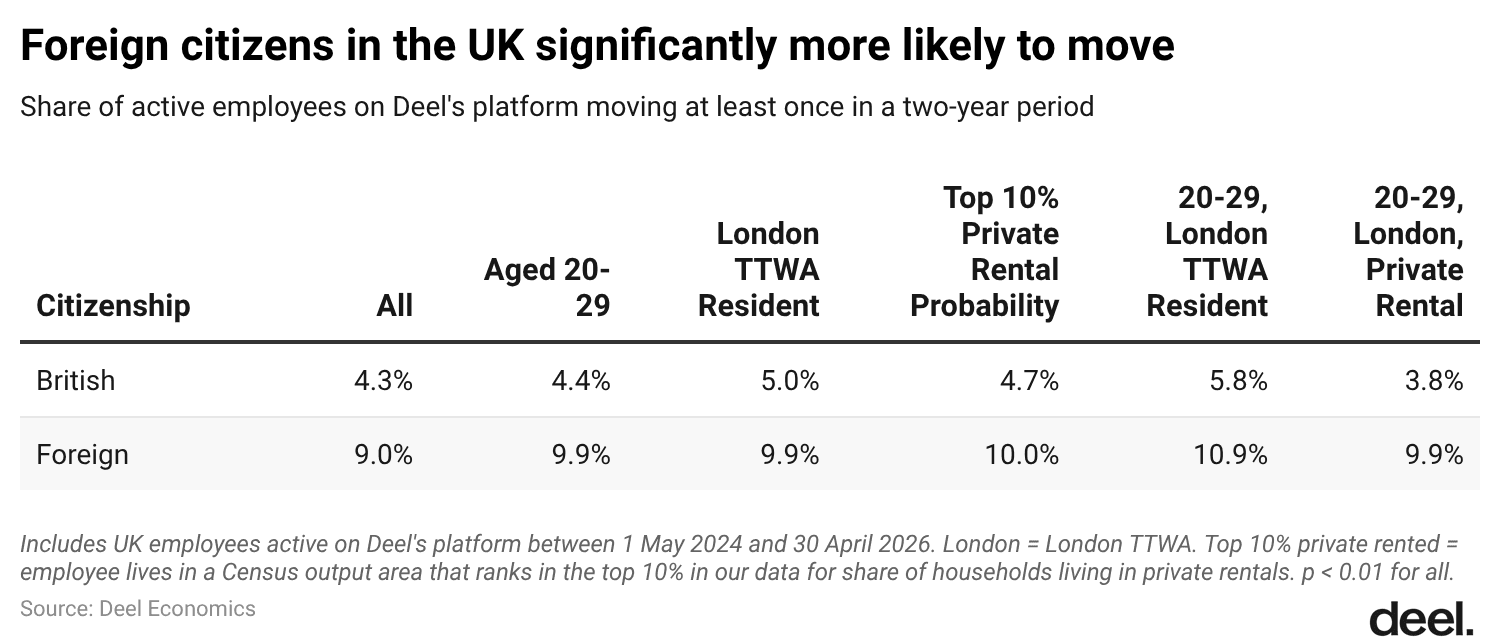
Moving patterns on Deel's platform also differ markedly between foreign and British workers. Foreign citizens are over twice as likely to have moved within the UK in the past two years. The difference holds within age groups, likelihood of living in private renting, and London-only subsamples, indicating that it is not driven by foreign workers' younger age profile or their concentration in London and private rental housing.
A logistic regression confirms that British citizenship is a strong predictor of staying put: foreign workers are roughly twice as likely to have moved as British workers, even after accounting for age differences, whether they live in London, and local housing market conditions. The implication is straightforward: a population with a larger share of foreign employees will also be one that moves more frequently.
When foreign workers do move, however, they tend to move shorter distances. The median distance between previous and current UK addresses is 5.01 km for foreign citizens, compared with 9.22 km for British workers. This pattern, too, holds across subgroups: workers aged 20-29, workers aged 30-39, current London residents, and London residents aged 20-29. Even when both groups move within London, British employees move significantly longer distances – 5.9 km compared to 4.4 km for non-British employees.
Right now, the UK is competing on all fronts. Top destinations for British workers include the UAE, Australia, and Singapore, pulled by tax advantages, higher salaries, or better lifestyle options for mid-career professionals that these countries offer. Meanwhile, the UK itself is attracting skilled workers from the U.S., India, and France, and India's flow into the UK alone has grown 142% in the past year. The government’s response has been direct: the Global Talent Task Force is developing proposals to eliminate the £766 visa fee for graduates of top-five universities and major prize winners. The Innovator Founder visa consolidated earlier startup routes, and Global Talent eligibility expanded to architects and creatives in October 2025.
Whether these measures reverse the decline depends on execution. Other markets, including Canada, Germany, and Singapore, are moving faster and more aggressively. But policy friction matters, and every additional hurdle or delayed reform sends talent elsewhere.
Methodology
(full methodology available upon request)
This analysis draws on data from Deel's platform, which covers over 40,000 companies hiring across 150+ countries. The primary observation window is April 1, 2025 to March 31, 2026. UK workforce trends use monthly data from January 2022 forward. Mobility analyses track address changes over a two-year window (May 1, 2024 to April 30, 2026).
An employee is considered active if their contract is being managed or they are being paid through Deel at least once in a given month. Foreign citizenship is determined when an employee's citizenship differs from their country of residence or contract. Visa status was determined from right-to-work checks performed by Deel on behalf of employers, primarily EOR (Employer of Record) clients.
Salary comparisons are based on annualized base salaries and are restricted to EOR employees to ensure fair comparisons. Occupations were matched to standardized classifications using the European Commission’s ESCO occupation framework via a two-stage AI model that analyzes job titles, descriptions, and industry data.
Geographic patterns are based on employees' postal codes, matched to travel-to-work areas (UK) and metropolitan statistical areas (US) using government-produced correspondence tables. "Overrepresented" refers to neighborhoods where foreign workers' share of the local workforce exceeds their share of the city's native workforce. Moving distances were calculated using the Haversine formula based on postal code centroids.
We fit a logistic regression on UK data predicting employee mobility using salary (GBP), London residency, British citizenship, and neighborhood private rental prevalence (2021 Census via Nomis). All variables were significant (p < 0.01) except rental prevalence (p = 0.10). British citizens were ~50% as likely to move as foreign nationals.
UK foreign-born workforce estimates were calculated using multilevel regression and post-stratification: ridge-penalized logistic regressions on Deel employee records aggregated by month, ONS industry section, and 2-digit SOC code, reweighted using UK population data from the ONS and calibrated to HMRC data reported by Oxford's Migration Observatory through December 2024. Estimates beyond December 2024 extrapolate the calibration ratio forward with slow decay to account for compositional drift in Deel's UK customer base.
All analyses exclude independent contractors. Workers and organizations were assigned anonymized IDs before analysis, and access was limited to a need-to-know basis.
Lauren Thomas is Deel's founding Economist, where she’s helping to bring Deel’s mission of breaking down geographic barriers to opportunity to life through data — a mission that resonates personally, as she's worked and studied in six cities across three countries!
Before joining Deel, Lauren worked in economic research and data storytelling at the Federal Reserve Bank of New York, Glassdoor, and Stripe. She has degrees in economics and data science from Oxford, Université Lumière Lyon 2, and Northwestern University.
Outside of work, she enjoys reading, playing volleyball, climbing, sewing her own clothes, and using Oxford commas. She does not enjoy long flights but takes a lot of them anyway!