
Guide
How to Set Up a Local Entity Abroad (A Complete Guide)
Global expansion
Get the resource for free
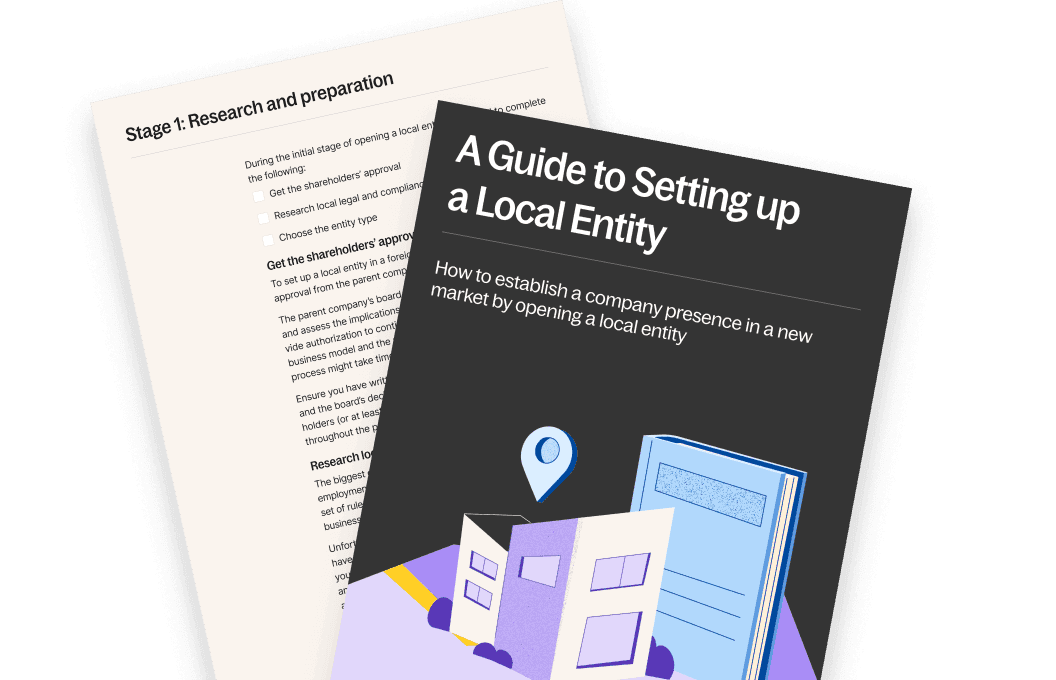
- Setting up a local entity is a major commitment. It involves regulatory compliance, corporate taxes, employment laws, and ongoing obligations that vary widely by country.
- This guide walks you through the process step by step. From choosing the right entity type to opening a local bank account and hiring employees compliantly, you’ll understand what’s required at every stage.
- Built for real-world expansion decisions. Drawing on global expansion expertise across dozens of countries, this guide helps you decide when a local entity makes sense — and when it doesn’t.
Expanding into a new country often raises a critical question:
Should you set up a local entity, or use an alternative like an Employer of Record?
While forming a local business can support long-term growth, it also comes with complexity. Companies must comply with local laws, manage regulatory compliance, navigate language barriers, and take on permanent obligations tied to employment, tax, and reporting.
This complete guide to setting up a local entity abroad helps you understand exactly what’s involved — so you can grow your business with clarity and avoid costly missteps.
What makes this guide different?
This isn’t a high-level overview or legal jargon dump.
The guide breaks down the practical realities of setting up a legal entity, including:
- How to choose between a subsidiary, branch office, or other entity structures
- What it takes to comply with local employment laws and employment contracts
- How to open a local bank account and manage financial operations
- Employer obligations like social security contributions and benefits
- Corporate taxes, ongoing filings, and regulatory compliance requirements
- Operational challenges such as language barriers and local administration
You’ll also learn how parent companies can compare entity setup against alternative hiring models based on speed, risk, and long-term goals.
Who will benefit from this guide?
- Founders and executives planning long-term international expansion
- Finance leaders evaluating corporate taxes, compliance, and cost structures
- Legal teams responsible for setting up a local entity and ensuring compliance
- HR leaders preparing to hire employees under local employment laws
- Operations teams managing branch offices or new local businesses
- Companies deciding between a local entity and other global hiring options
What’s inside?
- A step-by-step guide to setting up a legal entity abroad
- An overview of entity types, requirements, and timelines
- Key compliance obligations for employment, taxes, and social security
- Practical guidance on opening a local bank account
- Common challenges companies face — and how to avoid them
- A framework to assess whether a local entity is the right move for your business
FAQs
Is this guide relevant for all countries?
Yes. While requirements vary by location, the guide covers universal steps and highlights where local laws and regulations differ.
Does this guide explain different entity types?
Yes. It covers common options such as subsidiaries and branch offices, and explains how each impacts compliance and operations.
Can I use this guide if I plan to hire employees internationally?
Absolutely. It explains employment contracts, social security obligations, and how to comply with local employment laws.
Does setting up a local entity make sense for short-term hiring?
Not usually. The guide explains why local entities are best suited for long-term expansion rather than fast or temporary hiring needs.
Is this legal or tax advice?
No. This guide provides educational, practical guidance. You should consult local experts for country-specific legal or tax advice.